Flam cruise port, Norway
A hamlet at the end of Aurlandsfjord with a railway out of all proportion to it. The Flam Line climbs 866 metres in 20 kilometres without a rack or a cable, which makes it one of the steepest ordinary railways anywhere, and it was built to get people to this water.
Worth knowing. It took twenty years to build and most of its tunnels were dug by hand, a metre or so a month. Twenty tunnels, and eighteen of them cut by men with hammers.
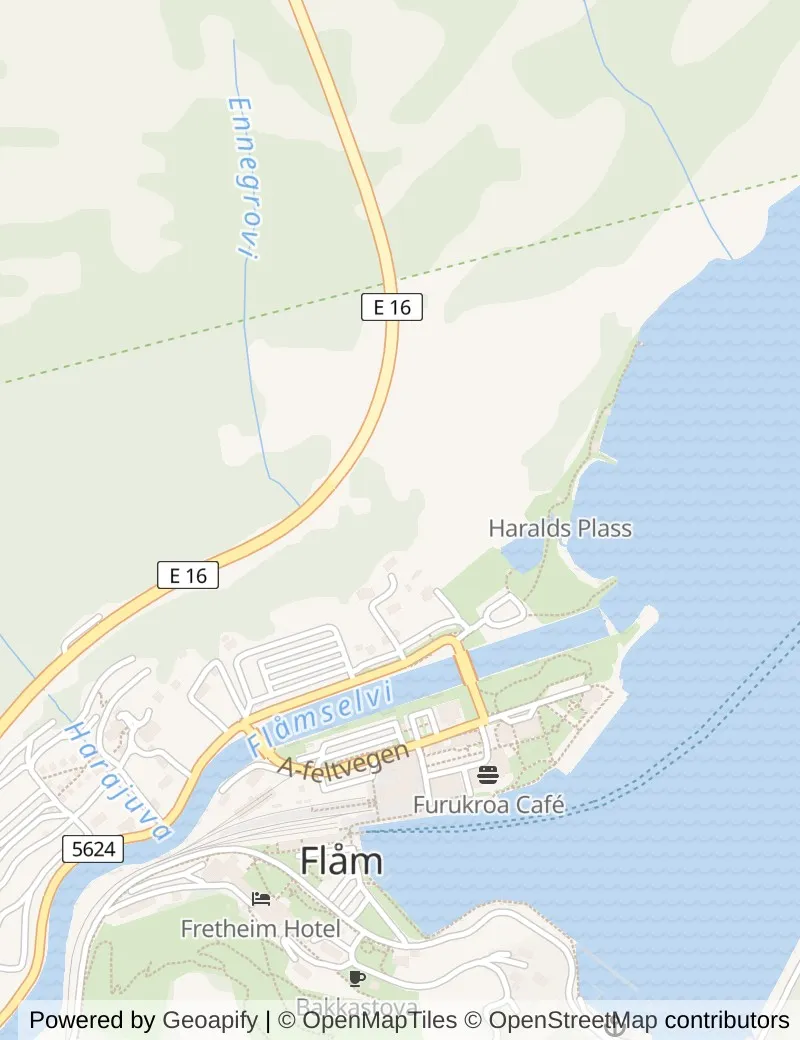
What to do in Flam for free
The village is a few steps from the ship. The railway museum behind the station costs nothing to go into and has one of the old engines standing in it. The path up the valley beside the river starts at the edge of the village, and you can walk as much of it as you feel like and turn round.
What costs money
The ship's own excursions usually cost more than booking the same trip yourself. Two things come with the price. The ship waits for its own excursions and does not wait for you. And if the port is missed, P&O refunds its own without you asking. A trip you booked yourself is a claim on your travel insurance, so check what your policy covers. The ship sells its own trips to all of these, and the desk is open on board if you would rather do it that way. That advice points at links I am paid for, so weigh it accordingly.
I get a small commission if you book through these links. It costs you nothing extra.
The Flam railway. Up 866 metres in twenty kilometres to Myrdal and back down, about an hour each way. It is the reason most people are here, and it leaves from the station beside the ship.
Stegastein. A wooden platform that runs thirty metres out over the Aurlandsfjord and ends in a sheet of glass. It is up a steep road above Aurland, so it is not a walk from the village.
The Naeroyfjord by boat. Two hours down the narrowest arm of the Sognefjord to Gudvangen, and a World Heritage site the whole way. The quiet electric boats and the open RIBs are two different days out.
Which ship calls at Flam, and when
Every call here between 15 August and 28 November 2026, with the hours ashore P&O published. These times are a guide, not a promise: the captain gives the real ones the day before.
| Ship | Sails | Day | Ashore |
|---|---|---|---|
| Iona | 22 August 2026, 7 nights | Day 5 | 07:30 to 17:30 |
| Arvia | 30 August 2026, 7 nights | Day 4 | 07:45 to 19:00 |
| Arvia | 2 May 2027, 7 nights | Day 4 | 07:45 to 19:00 |
| Iona | 29 May 2027, 7 nights | Day 5 | 07:30 to 19:00 |
| Iona | 12 June 2027, 7 nights | Day 5 | 07:30 to 19:00 |
| Iona | 26 June 2027, 7 nights | Day 5 | 07:30 to 19:00 |
| Iona | 10 July 2027, 7 nights | Day 5 | 07:30 to 19:00 |
| Iona | 24 July 2027, 7 nights | Day 5 | 07:30 to 19:00 |
| Iona | 7 August 2027, 7 nights | Day 5 | 07:30 to 19:00 |
| Iona | 21 August 2027, 7 nights | Day 5 | 07:30 to 19:00 |
| Iona | 27 May 2028, 7 nights | Day 5 | 07:30 to 19:00 |
| Iona | 10 June 2028, 7 nights | Day 5 | 07:30 to 19:00 |
| Iona | 24 June 2028, 7 nights | Day 5 | 07:30 to 19:00 |
| Iona | 8 July 2028, 7 nights | Day 5 | 07:30 to 19:00 |
| Iona | 22 July 2028, 7 nights | Day 5 | 07:30 to 19:00 |
| Iona | 5 August 2028, 7 nights | Day 5 | 07:30 to 19:00 |
| Iona | 19 August 2028, 7 nights | Day 5 | 07:30 to 19:00 |
How long you get ashore in Flam
The published times give you between about 10 and 11.5 hours alongside, depending on the sailing. Take off the time it takes a few thousand people to get off, and the time you need to be back on board before the ship leaves, and that is your day. P&O give the real hours the day before, and the all-aboard time is earlier than the departure time.
The other stops on these cruises
Every one of these is on at least one of the sailings that calls at Flam.
- HaugesundNorway calls this its birthplace: Harald Fairhair, who pulled the country into one kingdom in the 870s, had his seat at Avaldsnes, just down the coast.
- OldenA village of a few hundred people at the head of Nordfjord, 100 km in from the open sea.
- StavangerA herring and sardine-canning town that struck North Sea oil in 1969 and became Norway's richest city.
- Zeebrugge (for Bruges)The port is entirely man-made, pushed out into the sea from 1895 because Bruges had lost its own access to it: the Zwin channel silted up in the 1400s and the city simply stopped, which is precisely why it is still medieval.
Money and language in Norway
Norwegian krone (NOK, kr). Norway is close to cashless. A card works everywhere, including small kiosks and buses, and you can sail without touching a krone. Onboard is always charged in sterling, so this only matters ashore.
Almost everyone speaks excellent English, so these are a courtesy rather than a need.
| English | Norwegian | Say it |
|---|---|---|
| Hello | Hei | hey |
| Goodbye | Ha det | hah deh |
| How much? | Hvor mye koster det? | voor MEE-uh KOSS-ter deh |
| Thank you | Takk | tahk |
| Please | Vær så snill | vair soh snil |
Free, and it works with no internet. Give it the dates you sail and it works out your own stops and saves the street map for each one. It shows you round the ship too.
All the ports written up so far, the things to do before you sail, or the ship pages for Iona and Arvia.