Rotterdam cruise port, Netherlands
The centre was destroyed by bombing on 14 May 1940 and never reconstructed as it had been, so the Dutch city that looks least like a Dutch city is a deliberate choice. It has been Europe's largest port for most of the time since, and the architecture is the reason people come.
Worth knowing. A handful of buildings came through it, the town hall and the White House among them. The line the fire reached is set into the pavement in lights, twelve kilometres of it, so you can walk the edge of what was lost. A few streets away there are houses built as cubes tipped onto one corner.
What to do in Rotterdam for free
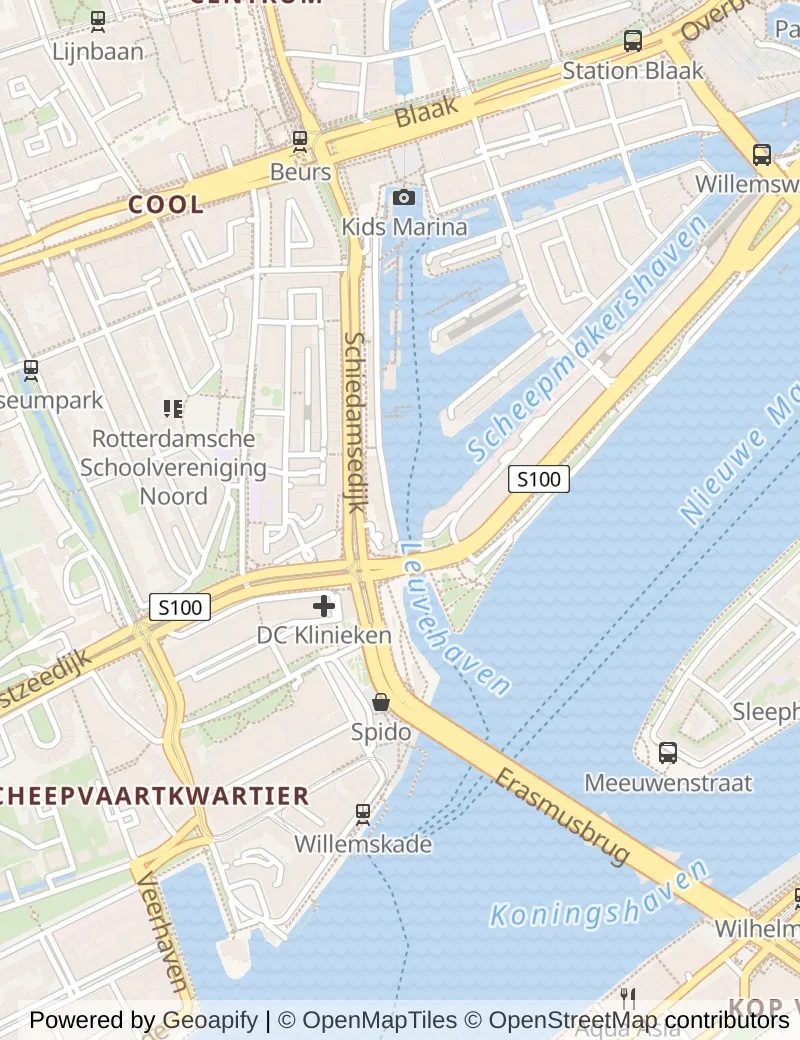
The ship lies on the Wilhelmina pier with the Erasmus bridge at the end of it, and walking over into the centre takes about half an hour on the flat. The bridge is the thing itself. One pale blue pylon leaning back, sixteen pairs of cables off the front of it, and the city calls it the Swan. The ship is here overnight, so the centre after dark is part of the stop.
What costs money
The ship's own excursions usually cost more than booking the same trip yourself. Two things come with the price. The ship waits for its own excursions and does not wait for you. And if the port is missed, P&O refunds its own without you asking. A trip you booked yourself is a claim on your travel insurance, so check what your policy covers. The ship sells its own trips to all of these, and the desk is open on board if you would rather do it that way. That advice points at links I am paid for, so weigh it accordingly.
I get a small commission if you book through these links. It costs you nothing extra.
The water taxi. A small fast boat straight across the river from the pier. It is how the city gets about, and it turns the half-hour walk into a few minutes.
Kinderdijk. Nineteen windmills standing along the dykes in a row, reached by waterbus from the city. It is the Dutch view that Rotterdam itself refuses to give you.
Delft. A quarter of an hour by train. Canals, a leaning tower and the blue and white pottery, which is the old country the bombing took out of Rotterdam.
Which ship calls at Rotterdam, and when
Every call here between 15 August and 28 November 2026, with the hours ashore P&O published. These times are a guide, not a promise: the captain gives the real ones the day before.
| Ship | Sails | Day | Ashore |
|---|---|---|---|
| Iona | 31 October 2026, 7 nights | Day 5 | 06:00 to 00:00 |
| Iona | 31 October 2026, 7 nights | Day 6 | 00:00 to 18:00 |
| Iona | 8 February 2027, 5 nights | Day 3 | 08:00 to 19:00 |
| Iona | 13 February 2027, 7 nights | Day 2 | 15:00 to 00:00 |
| Iona | 13 February 2027, 7 nights | Day 3 | 00:00 to 19:00 |
| Iona | 20 February 2027, 7 nights | Day 2 | 15:00 to 00:00 |
| Iona | 20 February 2027, 7 nights | Day 3 | 00:00 to 19:00 |
| Iona | 27 March 2027, 7 nights | Day 5 | 06:00 to 00:00 |
| Iona | 27 March 2027, 7 nights | Day 6 | 00:00 to 18:00 |
| Iona | 16 October 2027, 7 nights | Day 3 | 06:00 to 00:00 |
| Iona | 16 October 2027, 7 nights | Day 4 | 00:00 to 18:00 |
How long you get ashore in Rotterdam
The published times give you between about 11 and 19 hours alongside, depending on the sailing. Take off the time it takes a few thousand people to get off, and the time you need to be back on board before the ship leaves, and that is your day. P&O give the real hours the day before, and the all-aboard time is earlier than the departure time.
The other stops on these cruises
Every one of these is on at least one of the sailings that calls at Rotterdam.
- CherbourgTitanic's last call on mainland Europe, on the evening of 10 April 1912, and she never came alongside: tenders carried the passengers out to her.
- HamburgA Hanseatic free city that ran its own affairs for centuries and still calls itself the Free and Hanseatic City.
- Zeebrugge (for Bruges)The port is entirely man-made, pushed out into the sea from 1895 because Bruges had lost its own access to it: the Zwin channel silted up in the 1400s and the city simply stopped, which is precisely why it is still medieval.
Money and language in Netherlands
Euro (EUR, €). Cards, and often cards only: plenty of Dutch shops and cafes take no cash at all. Onboard is always charged in sterling, so this only matters ashore.
English is spoken almost universally.
| English | Dutch | Say it |
|---|---|---|
| Hello | Hallo | hah-LOH |
| Goodbye | Tot ziens | tot ZEENS |
| How much? | Hoeveel kost het? | HOO-vale kost het |
| Thank you | Dank u | dahnk oo |
| Please | Alstublieft | AHLS-too-bleeft |
Free, and it works with no internet. Give it the dates you sail and it works out your own stops and saves the street map for each one. It shows you round the ship too.
All the ports written up so far, the things to do before you sail, or the ship pages for Iona and Arvia.