Skjolden cruise port, Norway
The innermost point of the Sognefjord, about 200 kilometres from open water. Ludwig Wittgenstein built a hut above the village in 1914 to work alone, came back to it for decades, and called it the only place he could think properly.
Worth knowing. The hut was taken down in 1958 and rebuilt as a house down in the village. The same timber went back up on the original site in 2019.
What to do in Skjolden for free
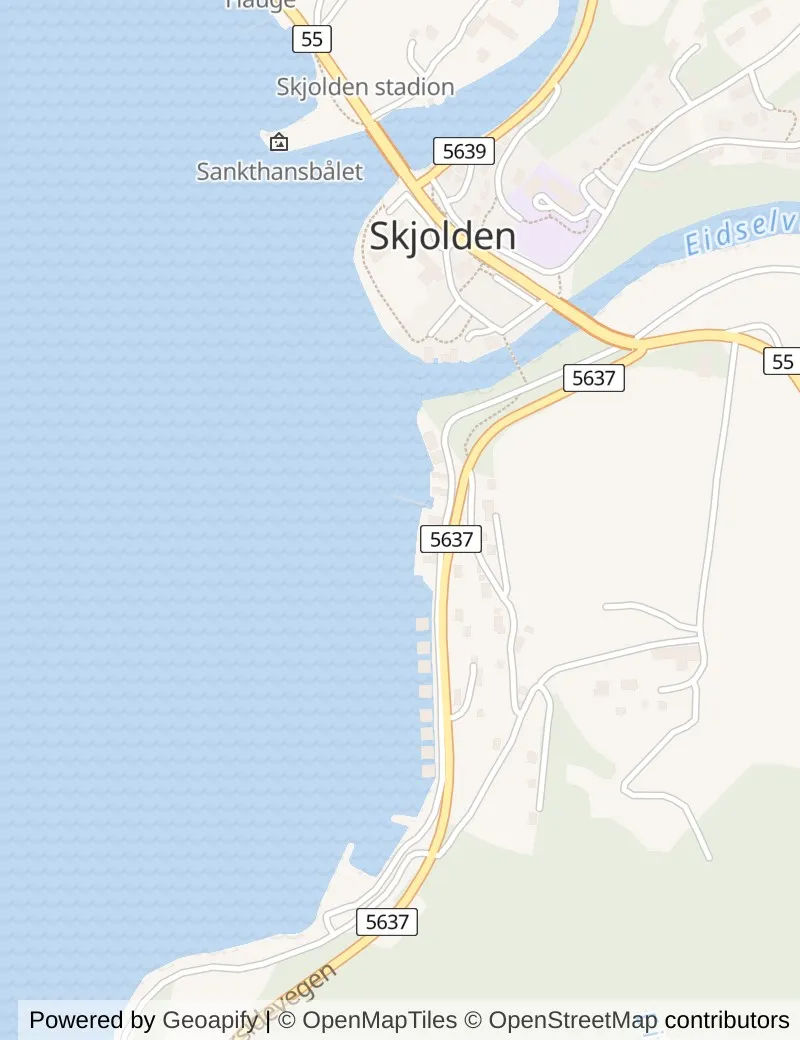
The village is ten minutes along the water from the pier, and the visitor centre there has maps, toilets and somebody who knows the paths. Two walks start from it and cost nothing. Sengaberget is the climb, steep in places, and it looks down on the village, the lake and the fjord. Asafossen is the easy one, three kilometres up the valley to the waterfall and on a road the whole way. Wittgenstein's hut is a kilometre further on from there, up a rough path that is steep at the end. You can stand at it for nothing, and the inside is locked.
What costs money
The ship's own excursions usually cost more than booking the same trip yourself. Two things come with the price. The ship waits for its own excursions and does not wait for you. And if the port is missed, P&O refunds its own without you asking. A trip you booked yourself is a claim on your travel insurance, so check what your policy covers. The ship sells its own trips to all of these, and the desk is open on board if you would rather do it that way.
Urnes stave church. The oldest stave church left standing, carved with animals that look more Viking than Christian, and on the World Heritage list for them. It is across the water and then a walk uphill, so it is a boat either way.
The Nigardsbreen glacier. An arm of the same ice cap that feeds these fjords, and one you can put a boot on with a guide. A coach into Jostedalen, then a small boat over the meltwater lake to the foot of it.
Which ship calls at Skjolden, and when
Every call here between 15 August and 28 November 2026, with the hours ashore P&O published. These times are a guide, not a promise: the captain gives the real ones the day before.
| Ship | Sails | Day | Ashore |
|---|---|---|---|
| Arvia | 6 September 2026, 7 nights | Day 4 | 08:00 to 17:30 |
| Arvia | 25 April 2027, 7 nights | Day 4 | 09:00 to 17:00 |
| Arvia | 29 August 2027, 7 nights | Day 4 | 07:00 to 17:00 |
| Arvia | 5 September 2027, 7 nights | Day 4 | 08:00 to 17:00 |
| Arvia | 26 March 2028, 14 nights | Day 11 | 09:00 to 18:00 |
| Arvia | 2 April 2028, 7 nights | Day 4 | 09:00 to 18:00 |
| Arvia | 2 April 2028, 14 nights | Day 4 | 09:00 to 18:00 |
| Arvia | 9 April 2028, 14 nights | Day 11 | 09:00 to 18:00 |
| Arvia | 16 April 2028, 7 nights | Day 4 | 09:00 to 18:00 |
| Arvia | 16 April 2028, 14 nights | Day 4 | 09:00 to 18:00 |
| Arvia | 4 June 2028, 14 nights | Day 12 | 08:00 to 18:00 |
| Arvia | 11 June 2028, 7 nights | Day 5 | 08:00 to 18:00 |
| Arvia | 11 June 2028, 14 nights | Day 5 | 08:00 to 18:00 |
| Arvia | 18 June 2028, 14 nights | Day 11 | 08:00 to 17:00 |
| Arvia | 25 June 2028, 7 nights | Day 4 | 08:00 to 17:00 |
| Arvia | 25 June 2028, 14 nights | Day 4 | 08:00 to 17:00 |
| Arvia | 13 August 2028, 14 nights | Day 11 | 08:00 to 17:00 |
| Arvia | 20 August 2028, 7 nights | Day 4 | 08:00 to 17:00 |
| Arvia | 20 August 2028, 14 nights | Day 4 | 08:00 to 17:00 |
| Iona | 16 September 2028, 7 nights | Day 5 | 08:00 to 17:00 |
| Iona | 23 September 2028, 7 nights | Day 5 | 08:00 to 18:00 |
How long you get ashore in Skjolden
The published times give you between about 8 and 10 hours alongside, depending on the sailing. Take off the time it takes a few thousand people to get off, and the time you need to be back on board before the ship leaves, and that is your day. P&O give the real hours the day before, and the all-aboard time is earlier than the departure time.
The other stops on these cruises
Every one of these is on at least one of the sailings that calls at Skjolden.
- AlesundThe whole town burned down in one night in January 1904 and was rebuilt at speed in Art Nouveau, with materials Kaiser Wilhelm II sent by ship.
- CherbourgTitanic's last call on mainland Europe, on the evening of 10 April 1912, and she never came alongside: tenders carried the passengers out to her.
- Cobh (tours to Cork)Titanic's last port of call, on 11 April 1912, when the town was called Queenstown.
- Getxo (tours to Bilbao)Basque country, at the mouth of the river up to Bilbao.
- HaugesundNorway calls this its birthplace: Harald Fairhair, who pulled the country into one kingdom in the 870s, had his seat at Avaldsnes, just down the coast.
- HellesyltA waterfall runs straight through the middle of the village and into the fjord.
- KristiansandLaid out as a grid in 1641 by Christian IV of Denmark-Norway, who wanted a fortress town guarding the entrance to the Skagerrak and had one built on the sand at the river mouth.
- La CorunaThe Spanish Armada sailed from this harbour in 1588, and it is still guarded by the Tower of Hercules, a Roman lighthouse from about the year 100 which has never stopped working: the oldest one on earth still doing its job.
- La RochelleThree medieval towers stand at the mouth of the old harbour, and a chain was slung between two of them to shut the port at night.
- Le HavreFour fifths of the town was destroyed in September 1944 and Auguste Perret rebuilt the centre in reinforced concrete on a grid, which is now a World Heritage site, listed for the planning rather than for anything old.
- Le Verdon (for Bordeaux)The mouth of the Gironde, where the estuary meets the Atlantic, and a deep water quay built for cargo rather than for a town.
- OldenA village of a few hundred people at the head of Nordfjord, 100 km in from the open sea.
- StavangerA herring and sardine-canning town that struck North Sea oil in 1969 and became Norway's richest city.
- VigoEurope's biggest fishing port by weight landed, and it smells honestly of it near the market.
Money and language in Norway
Norwegian krone (NOK, kr). Norway is close to cashless. A card works everywhere, including small kiosks and buses, and you can sail without touching a krone. Onboard is always charged in sterling, so this only matters ashore.
Almost everyone speaks excellent English, so these are a courtesy rather than a need.
| English | Norwegian | Say it |
|---|---|---|
| Hello | Hei | hey |
| Goodbye | Ha det | hah deh |
| How much? | Hvor mye koster det? | voor MEE-uh KOSS-ter deh |
| Thank you | Takk | tahk |
| Please | Vær så snill | vair soh snil |
Free, and it works with no internet. Give it the dates you sail and it works out your own stops and saves the street map for each one. It shows you round the ship too.
All the ports written up so far, the things to do before you sail, or the ship pages for Iona and Arvia.