Vigo cruise port, Spain
Europe's biggest fishing port by weight landed, and it smells honestly of it near the market. In 1702 a Spanish treasure fleet was cornered and sunk in this bay at the Battle of Rande, and enough gold was thought to be down there that Jules Verne sent Captain Nemo to collect it.
Worth knowing. People have been diving for that gold for three hundred years and nobody has found it. The most likely explanation is the dullest: it had already been unloaded and carted inland.
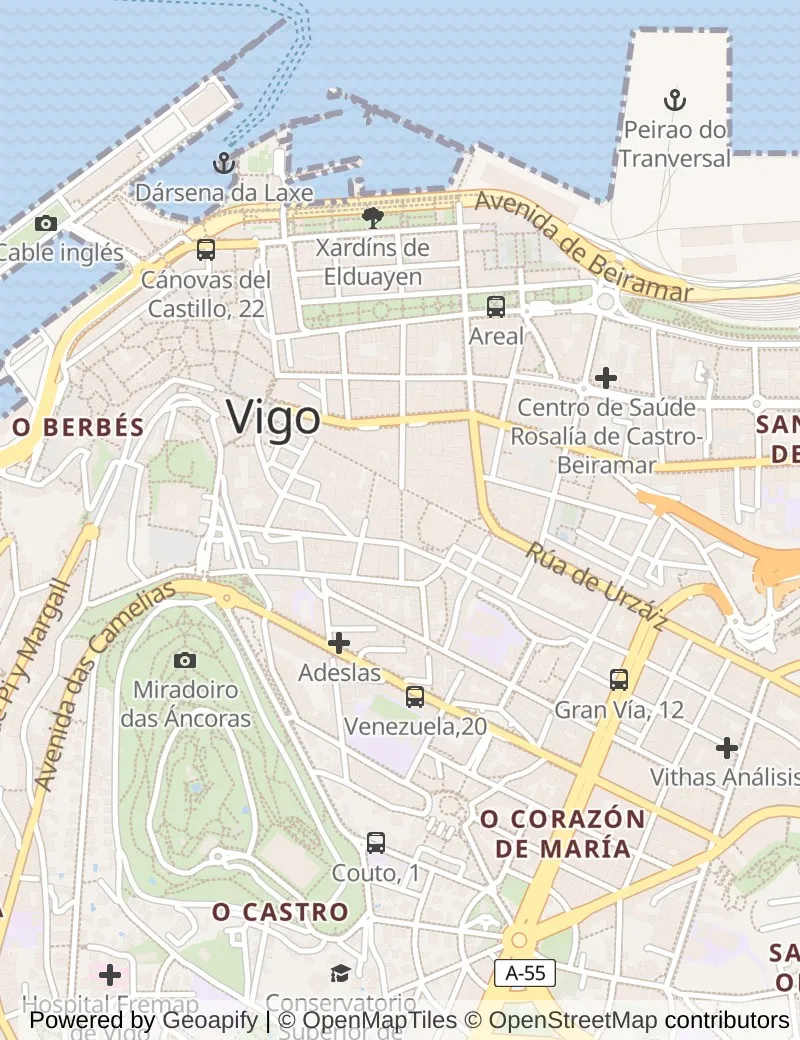
What to do in Vigo for free
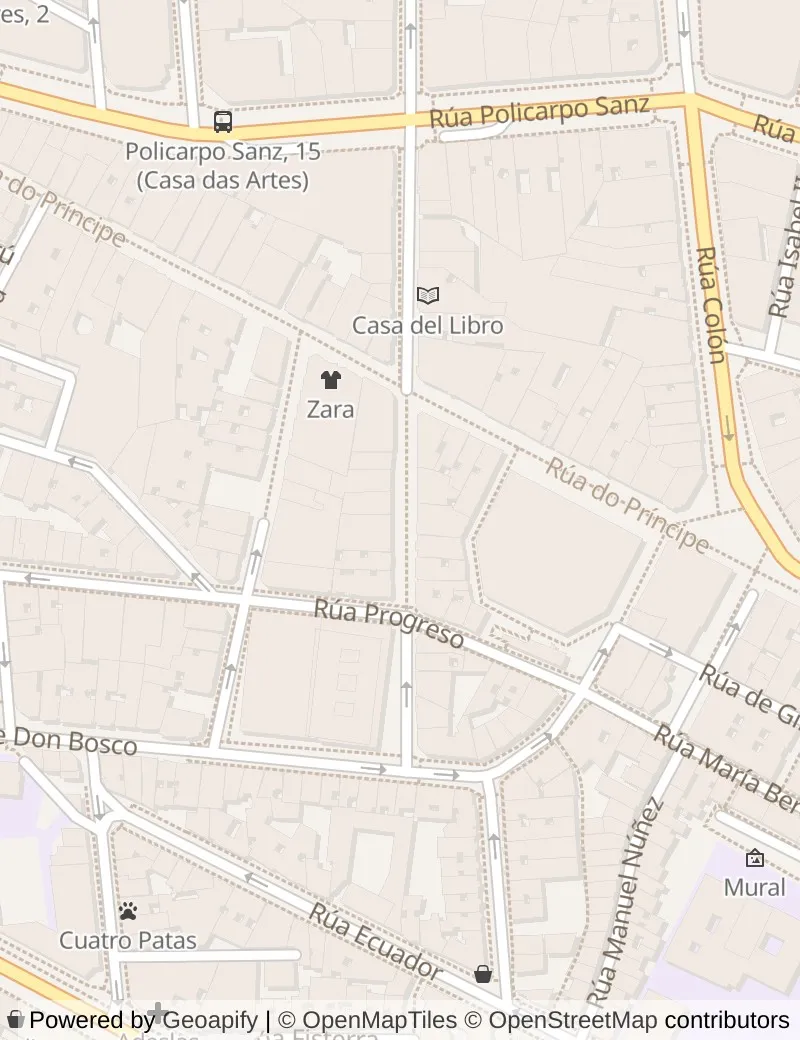
The old town starts at the top of the ramp off the ship and goes uphill from there. The street names are the trades that were done in them: fish in one lane, hats in the next, baskets in the one after. An hour on foot covers it and costs nothing but the coffee.
What costs money
The ship's own excursions usually cost more than booking the same trip yourself. Two things come with the price. The ship waits for its own excursions and does not wait for you. And if the port is missed, P&O refunds its own without you asking. A trip you booked yourself is a claim on your travel insurance, so check what your policy covers. The ship sells its own trips to all of these, and the desk is open on board if you would rather do it that way.
Santiago de Compostela. About an hour north by coach. Vigo is the other port that goes there, so it is the same cathedral and the same pilgrim road as from La Coruna.
The ferry across to Cangas. Twenty minutes over the bay from a terminal beside the ship, and they run all day. It carries people who live there rather than tour groups, and there is nothing to book.
Which ship calls at Vigo, and when
Every call here between 15 August and 28 November 2026, with the hours ashore P&O published. These times are a guide, not a promise: the captain gives the real ones the day before.
| Ship | Sails | Day | Ashore |
|---|---|---|---|
| Iona | 29 August 2026, 7 nights | Day 5 | 07:00 to 16:00 |
| Iona | 3 October 2026, 14 nights | Day 12 | 08:00 to 21:00 |
| Iona | 17 October 2026, 7 nights | Day 4 | 09:00 to 18:00 |
| Iona | 24 October 2026, 7 nights | Day 5 | 07:00 to 16:00 |
| Iona | 7 November 2026, 14 nights | Day 12 | 08:00 to 17:00 |
| Iona | 21 November 2026, 14 nights | Day 12 | 08:00 to 21:00 |
| Iona | 13 March 2027, 14 nights | Day 12 | 08:00 to 21:00 |
| Arvia | 11 April 2027, 14 nights | Day 12 | 07:00 to 16:00 |
| Arvia | 18 April 2027, 7 nights | Day 5 | 07:00 to 16:00 |
| Arvia | 23 May 2027, 7 nights | Day 5 | 07:00 to 16:00 |
| Arvia | 30 May 2027, 7 nights | Day 5 | 07:00 to 16:00 |
| Arvia | 20 June 2027, 14 nights | Day 4 | 08:00 to 17:00 |
| Arvia | 18 July 2027, 14 nights | Day 4 | 08:00 to 17:00 |
| Arvia | 1 August 2027, 7 nights | Day 5 | 07:00 to 16:00 |
| Arvia | 8 August 2027, 7 nights | Day 5 | 07:00 to 16:00 |
| Arvia | 15 October 2027, 7 nights | Day 5 | 07:00 to 16:00 |
| Iona | 23 October 2027, 7 nights | Day 6 | 07:00 to 16:00 |
| Arvia | 26 March 2028, 7 nights | Day 5 | 07:00 to 16:00 |
| Arvia | 26 March 2028, 14 nights | Day 5 | 07:00 to 16:00 |
| Arvia | 2 April 2028, 14 nights | Day 12 | 07:00 to 16:00 |
| Arvia | 9 April 2028, 7 nights | Day 5 | 07:00 to 16:00 |
| Arvia | 9 April 2028, 14 nights | Day 5 | 07:00 to 16:00 |
| Arvia | 16 April 2028, 14 nights | Day 12 | 07:00 to 16:00 |
| Arvia | 23 April 2028, 7 nights | Day 5 | 07:00 to 16:00 |
| Arvia | 23 April 2028, 14 nights | Day 5 | 07:00 to 16:00 |
| Arvia | 30 April 2028, 14 nights | Day 12 | 07:00 to 16:00 |
| Arvia | 7 May 2028, 7 nights | Day 5 | 07:00 to 16:00 |
| Arvia | 7 May 2028, 14 nights | Day 5 | 07:00 to 16:00 |
| Arvia | 14 May 2028, 14 nights | Day 12 | 07:00 to 16:00 |
| Arvia | 21 May 2028, 7 nights | Day 5 | 07:00 to 16:00 |
| Arvia | 21 May 2028, 14 nights | Day 5 | 07:00 to 16:00 |
| Arvia | 11 June 2028, 14 nights | Day 12 | 07:00 to 16:00 |
| Arvia | 18 June 2028, 7 nights | Day 5 | 07:00 to 16:00 |
| Arvia | 18 June 2028, 14 nights | Day 5 | 07:00 to 16:00 |
| Arvia | 9 July 2028, 14 nights | Day 12 | 07:00 to 16:00 |
| Arvia | 16 July 2028, 7 nights | Day 5 | 07:00 to 16:00 |
| Arvia | 16 July 2028, 14 nights | Day 5 | 07:00 to 16:00 |
| Arvia | 6 August 2028, 14 nights | Day 12 | 07:00 to 16:00 |
| Arvia | 13 August 2028, 7 nights | Day 5 | 07:00 to 16:00 |
| Arvia | 13 August 2028, 14 nights | Day 5 | 07:00 to 16:00 |
| Arvia | 3 September 2028, 14 nights | Day 12 | 07:00 to 16:00 |
| Arvia | 10 September 2028, 7 nights | Day 5 | 07:00 to 16:00 |
| Arvia | 10 September 2028, 14 nights | Day 5 | 07:00 to 16:00 |
| Arvia | 1 October 2028, 7 nights | Day 5 | 07:00 to 16:00 |
| Iona | 14 October 2028, 7 nights | Day 5 | 07:00 to 16:00 |
How long you get ashore in Vigo
The published times give you between about 9 and 13 hours alongside, depending on the sailing. Take off the time it takes a few thousand people to get off, and the time you need to be back on board before the ship leaves, and that is your day. P&O give the real hours the day before, and the all-aboard time is earlier than the departure time.
The other stops on these cruises
Every one of these is on at least one of the sailings that calls at Vigo.
- AlesundThe whole town burned down in one night in January 1904 and was rebuilt at speed in Art Nouveau, with materials Kaiser Wilhelm II sent by ship.
- AlicanteSanta Barbara castle stands on the bare rock of Benacantil straight above the town, held in turn by Carthaginians, Romans and Moors because whoever had the rock had the harbour.
- Arrecife de LanzaroteBetween 1730 and 1736 the ground opened and buried a quarter of the island under lava; the Timanfaya field is still hot enough a metre down to cook on.
- BarcelonaThe Gothic Quarter is built on the Roman town of Barcino, and the Sagrada Familia has been under construction since 1882: Gaudi knew he would not see it finished and said his client was in no hurry.
- Cadiz (tours to Seville)Probably the oldest continuously lived-in city in western Europe: the Phoenicians founded Gadir here around 1100 BC.
- CherbourgTitanic's last call on mainland Europe, on the evening of 10 April 1912, and she never came alongside: tenders carried the passengers out to her.
- Getxo (tours to Bilbao)Basque country, at the mouth of the river up to Bilbao.
- Gran CanariaColumbus put in at Las Palmas in 1492 to mend a rudder on his way west, and the house he is said to have stayed in is now a museum about him.
- HaugesundNorway calls this its birthplace: Harald Fairhair, who pulled the country into one kingdom in the 870s, had his seat at Avaldsnes, just down the coast.
- HellesyltA waterfall runs straight through the middle of the village and into the fjord.
- KristiansandLaid out as a grid in 1641 by Christian IV of Denmark-Norway, who wanted a fortress town guarding the entrance to the Skagerrak and had one built on the sand at the river mouth.
- La CorunaThe Spanish Armada sailed from this harbour in 1588, and it is still guarded by the Tower of Hercules, a Roman lighthouse from about the year 100 which has never stopped working: the oldest one on earth still doing its job.
- La Seyne-sur-Mer (for Toulon)A shipbuilding town across the water from Toulon, France's main Mediterranean naval base.
- Le HavreFour fifths of the town was destroyed in September 1944 and Auguste Perret rebuilt the centre in reinforced concrete on a grid, which is now a World Heritage site, listed for the planning rather than for anything old.
- LisbonOn All Saints' Day 1755 an earthquake, then a tsunami up the Tagus, then three days of fire destroyed most of the city and shook Europe's confidence in a benign universe.
- MadeiraPortuguese sailors found it uninhabited in 1419 and set the forest alight to clear it; the fire is said to have burned for years, and the island is named for the wood.
- MalagaPicasso was born here in 1881, in a flat on the Plaza de la Merced, and there is a museum of his work a few streets away.
- OldenA village of a few hundred people at the head of Nordfjord, 100 km in from the open sea.
- SkjoldenThe innermost point of the Sognefjord, about 200 kilometres from open water.
- StavangerA herring and sardine-canning town that struck North Sea oil in 1969 and became Norway's richest city.
- TenerifeMount Teide stands 3,715 metres over the island, the highest point in Spain and, measured from its base on the sea floor, the third largest volcano on earth.
Money and language in Spain
Euro (EUR, €). Cards are normal, though a small market stall or a taxi may want coins. The Canary Islands are Spain and use the euro too. Onboard is always charged in sterling, so this only matters ashore.
English is common in the ports and thinner a street back.
| English | Spanish | Say it |
|---|---|---|
| Hello | Hola | OH-la |
| Goodbye | Adiós | ah-DYOSS |
| How much? | ¿Cuánto cuesta? | KWAN-toh KWESS-ta |
| Thank you | Gracias | GRA-syass, and GRA-thyass on the mainland if you want to blend in |
| Please | Por favor | por fa-VOR |
Free, and it works with no internet. Give it the dates you sail and it works out your own stops and saves the street map for each one. It shows you round the ship too.
All the ports written up so far, the things to do before you sail, or the ship pages for Iona and Arvia.